Design idea · Buying checklist
Rugs for Small Living Rooms: Size First, Pattern Second
A small living room needs a bigger rug than most people buy. How to size one so the space reads as a single room instead of a raft.
Updated September 15, 2026
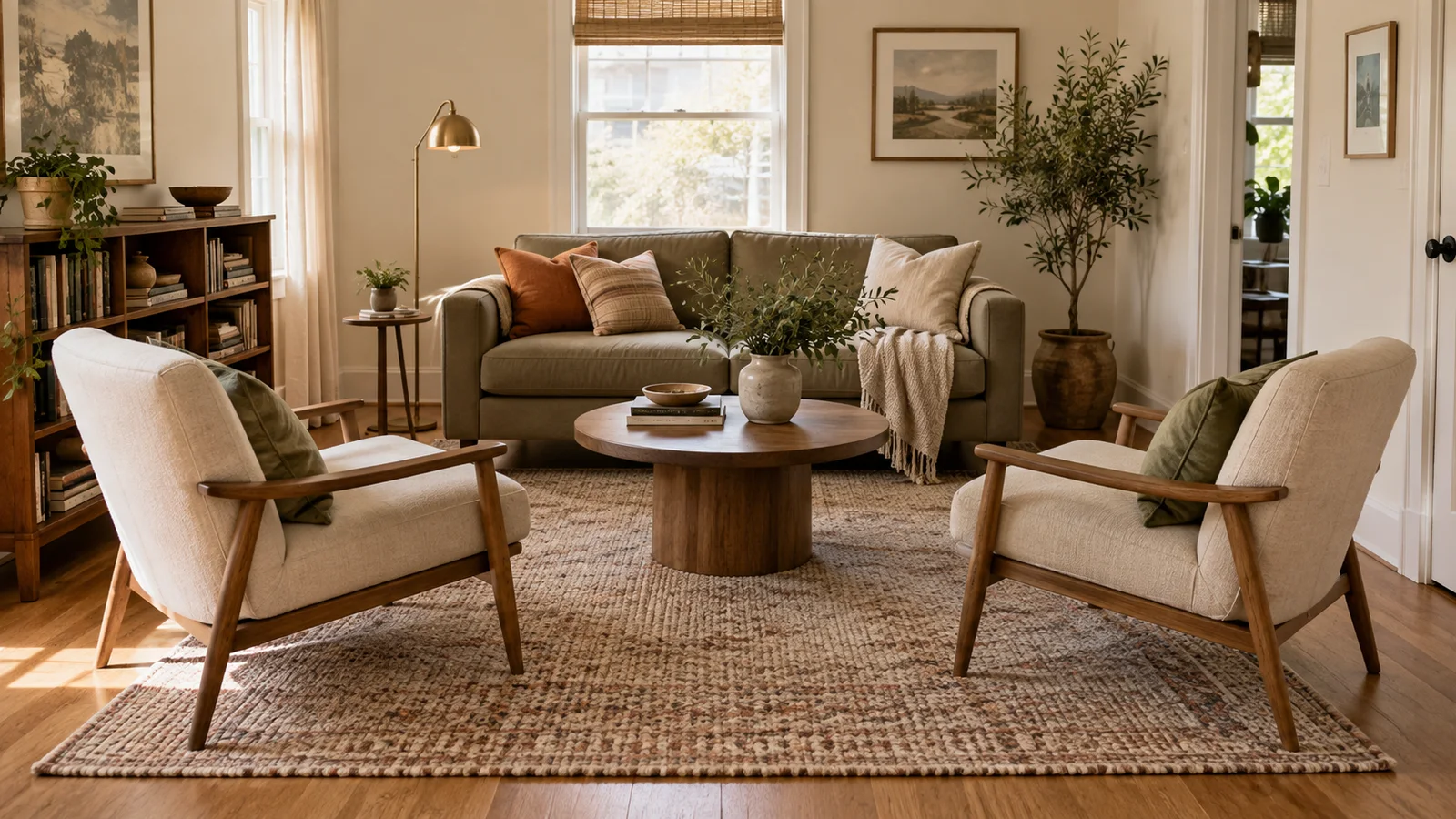
The safest-looking rug can be the choice that makes a small living room feel more cramped. When a narrow rug floats between the sofa and chairs, it divides the floor into smaller patches and leaves the furniture without a shared boundary. Start with the seating footprint. Pattern comes later.
Give the seating one shared edge
A useful starting point is to place at least the front legs of the sofa and main chairs on the rug. The overlap connects the furniture without requiring wall-to-wall coverage. If one chair sits outside the rug, the room may still work, but the arrangement should look deliberate rather than accidental.
Measure the furniture as a group. Mark the possible rug edges with painter’s tape, then view the outline from the doorway and from the seat you use most. A standard size label cannot tell you whether the rug reaches the right legs in your room.
Keep the path clear
The rug should support the layout without creating a narrow passage or a raised edge where people turn. Preserve about 36 inches for a main walkway when the room allows it. Between a sofa and coffee table, 16 to 20 inches usually leaves room to sit down and reach the surface without crowding the gap.
Those numbers are starting points. Door swings, mobility needs, radiators, floor vents, and the actual depth of the furniture may require more space. Tape the boundary, walk the usual route, and open every nearby door before ordering.
Choose pile for the way the room moves
Low-pile and flatwoven rugs are easier to place near moving furniture and door swings because they add less height. They also tend to release surface debris more readily than a deep shag. The exact result depends on the fibre, weave, backing, and vacuum instructions, so check the current listing instead of treating “low pile” as a complete care plan.
A thick rug can bring softness and visual depth, but it needs more clearance. Coffee-table legs may sit unevenly at the edge, lightweight chairs can catch, and some doors will no longer clear the surface.
Use colour to hold the floor together
A quiet, low-contrast pattern can disguise everyday variation while keeping the floor visually continuous. A pale solid puts more attention on the furniture, but it may show tracked soil and spills sooner. A faded pattern can add contrast beneath light upholstery without turning the rug into a second focal point.
Bring a swatch into the room if one is available. Flooring, window direction, and evening lamplight can pull grey, pink, or yellow from a neutral that looked straightforward online.
Natural texture comes with a care decision
Jute and sisal add coarse texture and warmth at floor level. They can also shed, hold fine dust underneath, feel rough underfoot, and catch some pet claws. Wool varies by construction and pile, while synthetic fibres vary by yarn, backing, and finish. Fibre names narrow the search; they do not settle durability or care by themselves.
If the room handles frequent spills, pets, or shoes from the entry, read the cleaning instructions before falling for the texture. A rug that looks right but makes the household anxious is the wrong fit.
Check this before you choose
The rug should connect the main seating, leave a usable path, clear moving doors, and suit the amount of care the room can support. Confirm the finished dimensions rather than the nominal size, since handmade and natural-fibre rugs can vary. Then check pile height, backing, pad requirements, expected shedding, cleaning instructions, and return terms on the exact listing.
Take this list with you
Tape out the rug before you compare colours
- Measure the full seating group, then mark the proposed rug edges with painter's tape.
- Put at least the front legs of the sofa and main chairs inside the taped boundary.
- Walk the main route through the room and check the coffee-table gap.
- Confirm the exact fibre, pile, backing, care instructions, and return terms.