Design idea · Buying checklist
Warm Modern Lighting by Room: A Layered Plan Without the Glare
One ceiling fixture is usually why a room feels like an office. What to add instead, room by room, and how low to hang it.
Updated September 15, 2026
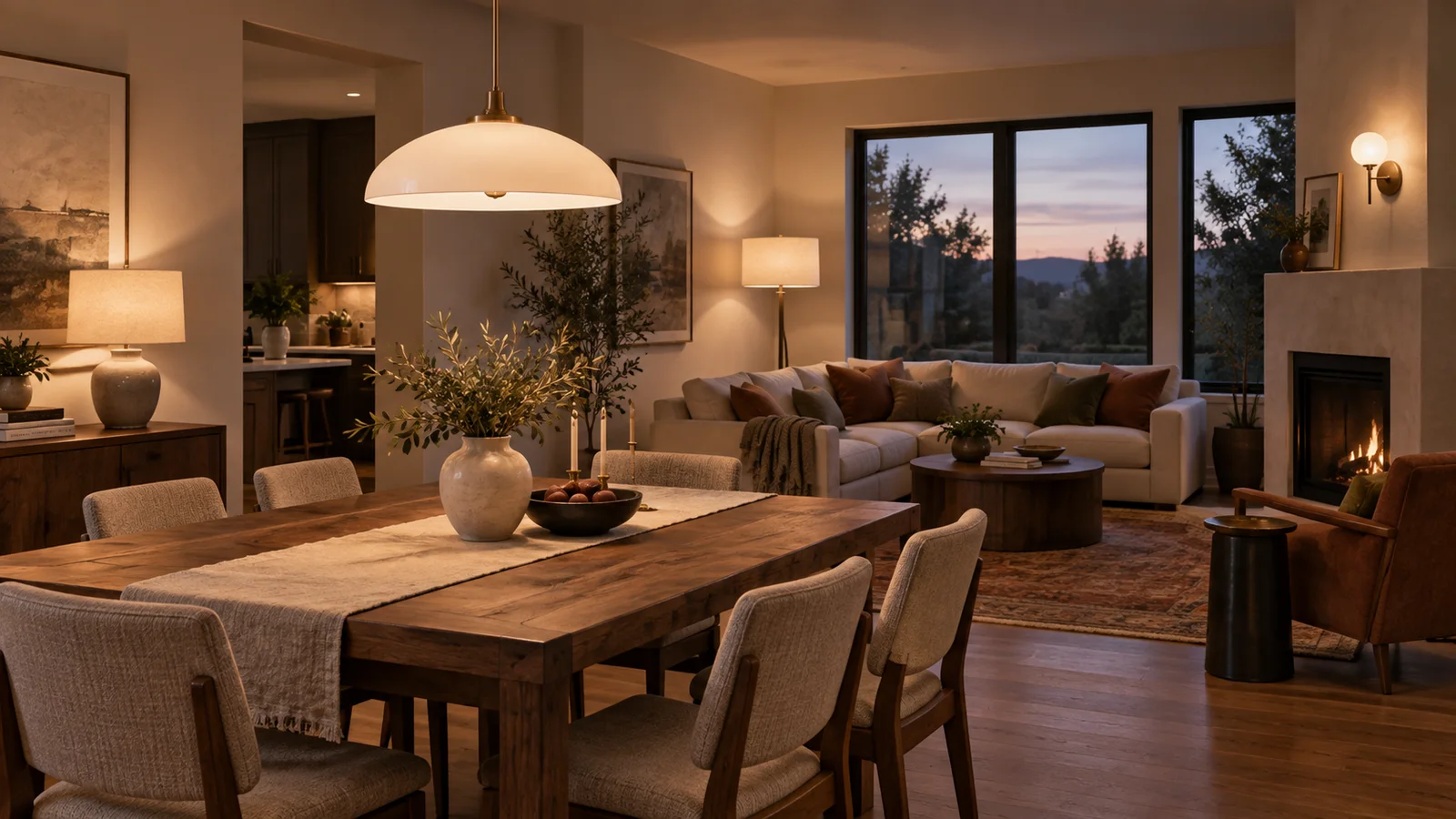
A warm bulb cannot fix a room that asks one ceiling fixture to do every job. Comfortable lighting comes from several sources placed where the room needs them: broad ambient light, focused task light, and smaller accent light that gives walls and corners some depth.
Separate warmth from brightness
Colour temperature, brightness, and colour rendering describe different things. A bulb around 2700K to 3000K can read warm, but the room can still feel dim if it does not supply enough lumens. A high colour rendering index helps wood, paint, textiles, and food look closer to their natural colour.
Check the fixture’s bulb requirements, rated output, dimming compatibility, and shade material together. A clear shade exposes more glare than opal glass or fabric. A metal shade directs light toward a smaller area and gives less general glow around the room.
Living rooms need light at more than one height
Start with the way the room is used after sunset. A floor lamp beside a reading chair handles a different job from a shaded table lamp on a console. A sconce can lift a dark wall or frame art. The ceiling fixture can support the plan without being the only source switched on.
Place task light close enough to the chair that the beam reaches the page without a bare bulb sitting in the reader’s sightline. In an open room, use lamps to identify separate conversation, reading, and work areas while keeping the finishes related through shape, colour, or metal undertone.
Dining light should follow the table
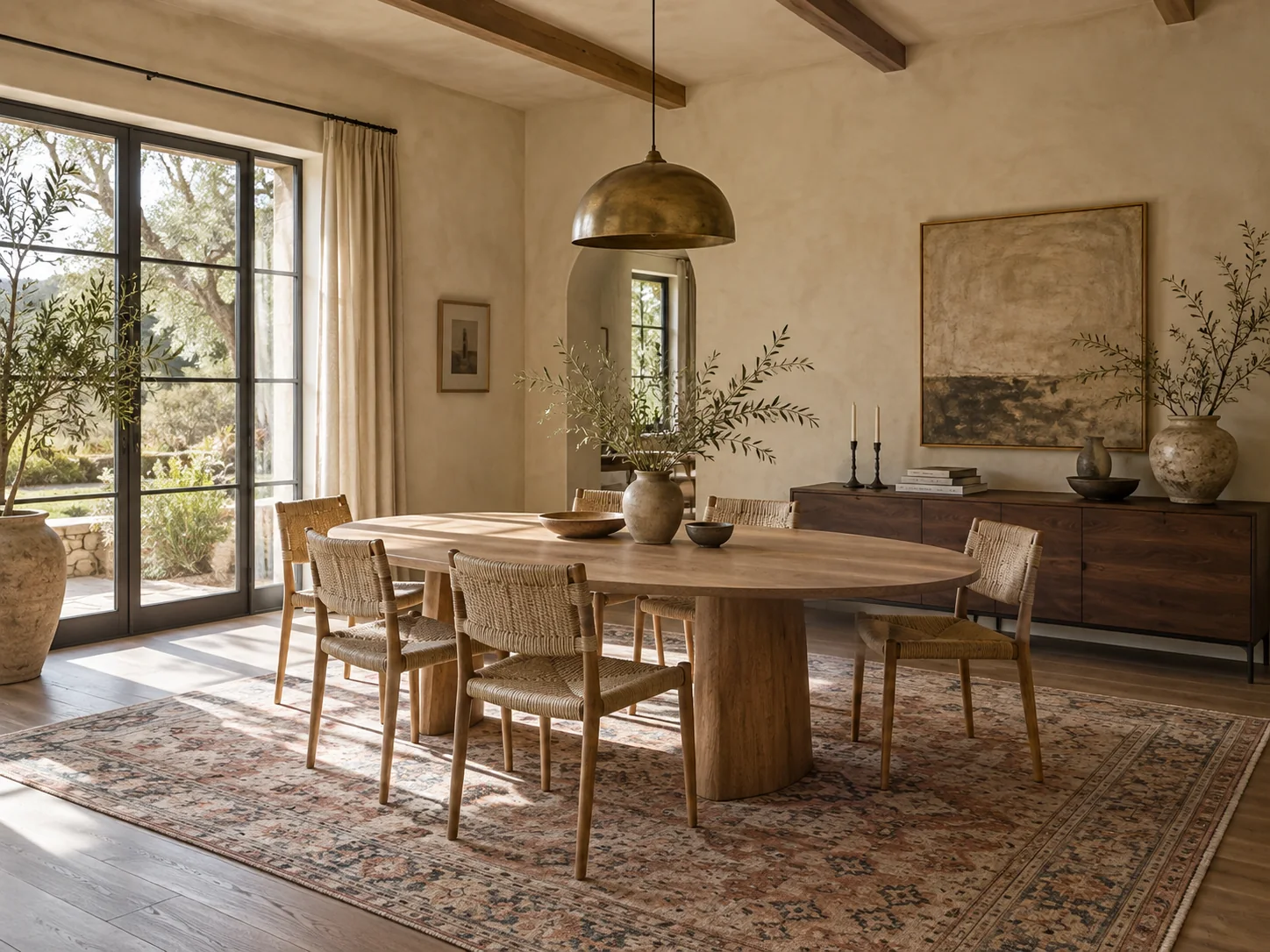
Centre the pendant or chandelier on the dining table rather than the room when the two centres differ. A common starting range places the bottom of the fixture 29 to 33 inches above the tabletop. Adjust for ceiling height, fixture size, and sightlines so people can see across the table without staring into the bulb.
A shaded lamp or pair of sconces on a sideboard can soften the edges of the room after the main fixture is dimmed. Confirm the electrical plan and final hanging height with a qualified installer.
Kitchens need clear task light
Kitchen lighting has to reach counters without throwing a working person into shadow. Pendants over an island often begin around 33 to 34 inches above the counter, then move up or down according to fixture diameter, ceiling height, and the eye level of the people using the space.
Under-cabinet lighting can fill the work surface that ceiling fixtures miss. Keep the colour temperature reasonably consistent with nearby rooms, and check the colour rendering when food, tile, stone, and wood finishes need to read accurately.
Bedrooms benefit from softer sources near eye level
Bedside lamps or sconces make it possible to read without filling the whole room with overhead light. Position the shade or adjustable head so the light reaches the page and the bulb stays out of direct view. If two people use the room differently, separate controls matter more than matching fixtures.
A ceiling fixture can provide general light for dressing and cleaning. Dimming it does not replace the focused light needed at the bed or dresser.
Bathrooms need light beside the face
Light placed only above a mirror can cast shadows under the eyes and chin. Sconces beside the mirror spread light more evenly across the face, while a ceiling fixture provides general illumination and a rated shower light handles the wet area where needed.
Bathroom fixtures must suit the electrical location and moisture exposure. Confirm local requirements and wet- or damp-location ratings with the product documentation and installer.
Coordinate without buying a matching set
Fixtures can share one element without repeating every detail. Warm brass may recur in two rooms while silhouettes change. Opal glass can connect a pendant to a sconce. Matte black can provide a thin counterpoint to warm metal without taking over the scheme.
Before buying, photograph each room after dark with only the lights you normally use. Mark the glare, dark corners, and unfinished task areas. That record gives every new fixture a job.
Take this list with you
Walk the rooms after dark
- List the ambient, task, and accent light already available in each room.
- Mark the seats, counters, artwork, and dark corners that need a specific light source.
- Check colour temperature, lumens, CRI, shade material, dimming, and bulb replacement.
- Have a qualified electrician confirm wiring, junction boxes, clearances, and controls.